

Why Gantry Rotation Speed Matters for Cardiac Applications
Healthcare providers looking to diagnose cardiovascular disease are increasingly turning to CT. CT angiograms (CTA) have been proven to be equivalent or superior to other imaging methods, with the added benefit of being noninvasive.
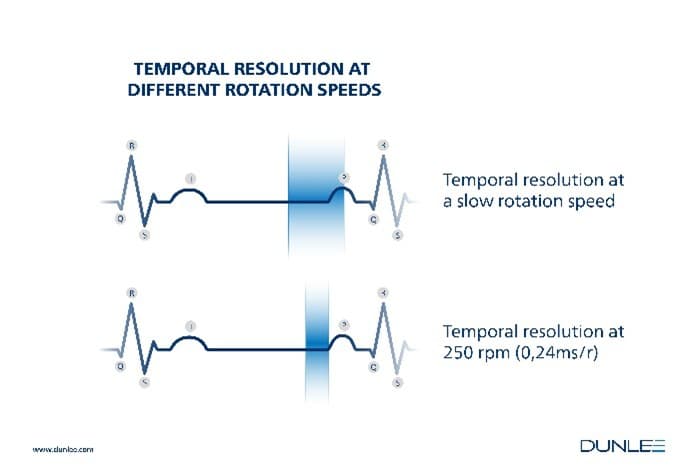
However, not all CT systems are equally adept at cardiac studies. One factor that greatly impacts the quality of cardiac CT exams is gantry rotation speed. This is due to a simple reason: the heart is the fastest muscle in the human body, beating at speeds ranging from approximately 50 beats per minute (bpm) to 160 bpm for some newborn children. To image the heart without significant motion artifacts, CT systems must be capable of very high temporal resolution. Faster gantry rotation speed also improves workflow by decreasing scan times, which may be crucial for treating emergency cases and can improve patient throughput.
Cardiac Mode Option Supports Cardiovascular Imaging
Dunlee’s CT Xpert bundles with the cardiac mode option are designed to support excellence in cardiac CT imaging. This solution offers extra high gantry rotation speeds of 250 rpm (0.24ms/rotation), enabling super-fast scans. The Xpert bundle combines a generator, X-ray tube, cooling unit, power distribution unit, and cables. It also comes with the TubeManager, a plug-and-run function that is used during implementation and tube replacement. It self-installs and synchronizes with other bundled components and secures service business with a function that ensures that tubes are only replaced by equivalent, high-quality Dunlee products.
Your Reliable Partner for Cardiovascular CT
Dunlee Dunlee has over 100 years’ experience in developing, producing, and integrating innovative components for imaging systems. It offers support during development and throughout the product lifecycle, contributing to its customers’ efficient production and go-to-market strategies.
To learn more about Dunlee’s cardiac mode option, visit RSNA Booth #3104 in the South Hall A, Level 3.
To learn more about Dunlee’s cardiac mode option, visit RSNA Booth #3104 in the South Hall A, Level 3.
